Identify the metal roofing system
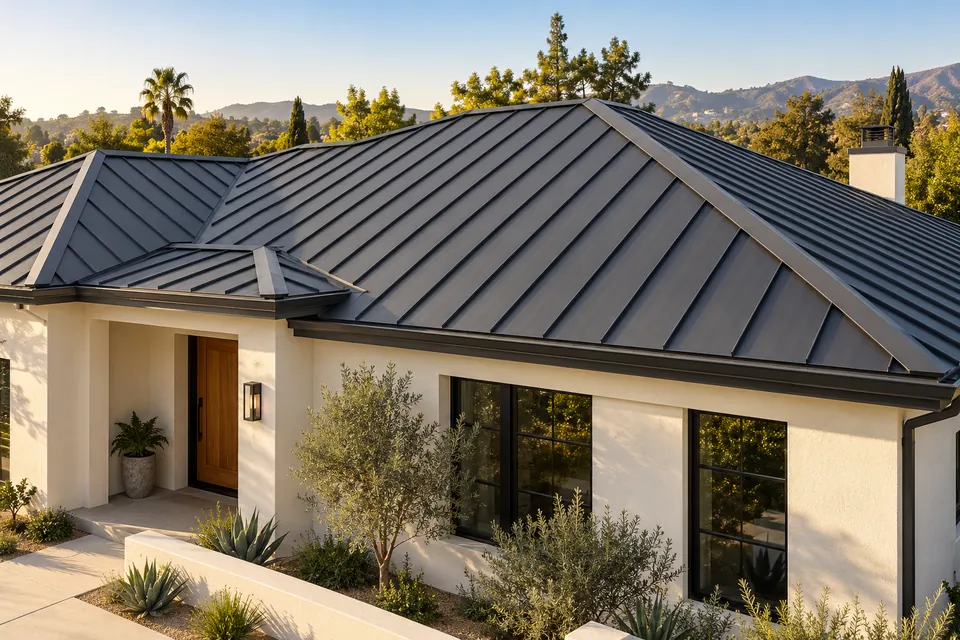
Ask whether a proposal is for standing seam, exposed-fastener panels, or a metal shingle or tile-style product. Standing-seam systems conceal their primary attachment beneath the panel assembly; exposed-fastener systems use visible fasteners through the panels. These are meaningful differences when discussing appearance and maintenance.
Request the manufacturer, profile, finish, and installation details. A sample panel can help you see seam height, texture, and color. If a quote simply says metal roof, ask for more detail before comparing it with another proposal.
Review the roof shape and junctions
Simple roof planes and complex roof intersections create different installation demands. Ask how valleys, walls, chimneys, skylights, and low-slope junctions will be handled. Small trim details can be visible from the street and can also affect how water is directed off the roof.
If you have solar panels or expect to add them, discuss attachment coordination before choosing a system. The roofing and solar scopes need a clear division of responsibility. A plan for future service access is also useful when the roof supports equipment that another trade will maintain.
Compare the complete changeover scope
Switching materials can involve more than replacing the visible covering. Ask what will be removed, how the roof deck will be evaluated, what underlayment is proposed, and how adjoining details will be altered. Confirm that the system is suited to the roof's slope and design.
For budgeting, compare the full installed scope and the written maintenance expectations. The least expensive panel description does not tell you what flashing, trim, preparation, or accessories are included. Ask how concealed damage and design changes will be priced if they appear after work starts.
Ask practical questions about ownership
Discuss finish care, inspections, and the maintenance associated with the selected fastening system. Metal roofing still needs attention; a material choice does not remove the need to check penetrations, drainage, or damage. Obtain the manufacturer's maintenance guidance for the exact product.
Also ask about appearance expectations such as panel waviness, which is sometimes described as oil canning. Review examples and the manufacturer's explanation before committing to a finish. That conversation is more useful before installation than after a large roof surface is in place.
- Name the panel system and finish in the estimate.
- Clarify flashing, edge trim, and penetration details.
- Coordinate solar and other roof equipment.
- Review maintenance guidance and written warranty terms.
STRAIGHT ANSWERS
A few things you may be wondering.
Are all metal roofs standing seam?
No. Standing seam is one category. Exposed-fastener panels and metal shingles or tile-style systems are other options.
Can a metal roof go over existing roofing?
Do not assume it can. The existing condition, proposed system, structural considerations, and project requirements need review before an overlay is proposed.